
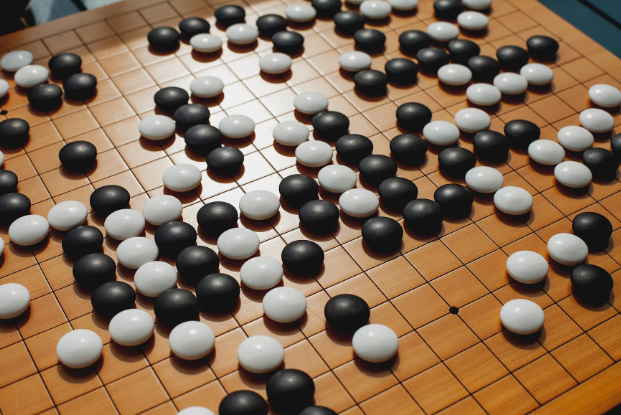
Alt text “Go board showing different moves”
Some of the best games have a very simple trick at their heart. They make sense quickly. Understanding them properly can take years.
The basic rules might fit on a single page. A first game can begin within minutes. Yet there are still better decisions to make and small mistakes that separate experienced players from complete beginners. People can always learn and get better.
Games that are too complicated at the start can feel like hard work. Games with no real depth often lose their appeal quickly. The sweet spot sits where the game is easy to access but tough to master.
Many types of games (including different genres and formats) showcase this.
Casino Table Games Make The Basics Feel Simple
Casino table games are often designed around clear goals and really straightforward rules.
Blackjack is one of the strongest examples of rules that can be grasped straight away.
The goal is to build a hand that gets as close to 21 as possible without going over. The player simultaneously tries to beat the dealer’s cards. Cards have familiar values. A new player can understand the basic flow very quickly.
That does not mean the game is shallow.
The difficult part comes from making consistently good decisions across lots of different hands. Whether to hit or stand can depend on the cards already showing. Experienced players often develop a much stronger feel for those situations or their own strategies. There are also a lot of different varieties of blackjack now. The fact that the game has grown in popularity as more people play blackjack games online means nuances in the rules and different varieties.
Poker goes even further.
The hand rankings themselves are not particularly difficult to learn. The challenge comes from reading opponents and adapting to different playing styles. It can take a very long time.
Accessibility is a big part of the appeal of table games. The rules rarely act as a barrier for beginners. But there is often far more going on once the first few rounds are out of the way.
Board Games Have Used This Formula For Centuries
Board games may be the original home of the “easy to learn and hard to master” idea.
Chess is probably the most famous example.
Learning how each piece moves is fairly straightforward. Pieces usually go one way. The king must be protected. Players can easily grasp the rules and start making moves.
The real difficulty begins after that.
Players need to think about position and what an opponent might be planning several moves ahead. Two people can know exactly the same rules while playing at completely different levels.
The ancient Asian game of Go takes this idea even further.
Its rules are remarkably simple. It revolves around players placing stones on a board to control territory. Yet the number of possible positions is enormous. People can spend decades studying the game. The number of possible outcomes of the game is bigger than the number of atoms in the universe.
Modern board games use similar ideas. The best board games often hide complexity behind very clean rules.
Console Games Often Teach Through Play
Console games approach the same problem in a different way.
Many modern games teach mechanics gradually. A racing game might start with steering and braking before introducing tuning and advanced driving techniques.
Sports games work similarly. Anyone familiar with football or basketball can usually understand what is happening immediately. Mastering formations and player abilities can take hundreds of matches.
Fighting games are another classic example.
The basic idea is obvious: reduce an opponent’s health before the same happens in return. Actually becoming good at one can be brutal.
PC Games Can Hide Huge Depth Behind Familiar Controls
PC games often take the concept even further because they have room for extremely detailed systems.
Rainbow Six Siege is a good example.
The game is easy to understand the basics of as a tactical shooter. Teams compete across enclosed maps. The main objective of each round is clear.
The deeper game is far more complicated.
Map knowledge matters enormously. Different operators have unique gadgets and abilities. Players can look at their statistics and try to improve all the time. Marginal gains may help them to become a better player.
A new player can understand what the game is asking within minutes. Mastering it is another story.
Strategy games work in a similar way.
Something like Civilization can begin with simple ideas such as founding cities and gathering resources. Things like managing economies and long-term planning soon turn it into a much deeper puzzle.
Simple Rules Create Room For More Decisions
One reason these games work so well is that complicated rules are not the same thing as complexity. A game can have hundreds of rules and still offer fairly obvious choices.
Another can have ten rules and produce endless possibilities.
Chess is the perfect example. The pieces do not suddenly gain new abilities after a hundred hours. The rules remain exactly the same. What changes is the player’s understanding of them.
Easy-to-learn games survive because they do not demand too much at the beginning. They become more challenging and interesting as they unravel.