
Not every item in your own Rainbow Six Siege inventory can be traded, and that fact causes more confusion than any other part of the marketplace. This guide to r6 marketplace tradable items explains what can be listed, what cannot be traded, and why.
The good news is that the system is not random. Some items are made to be traded, some are locked by design, and some are only locked for a season. This guide explains each group in plain language and shows you how to check any single item before you act, so you can avoid the mistakes that cost new traders time and money.
Where rules come from fan-guide reporting rather than independently verified official policy, this guide says so plainly: guides explain the system, but the marketplace screen in front of you decides the trade.
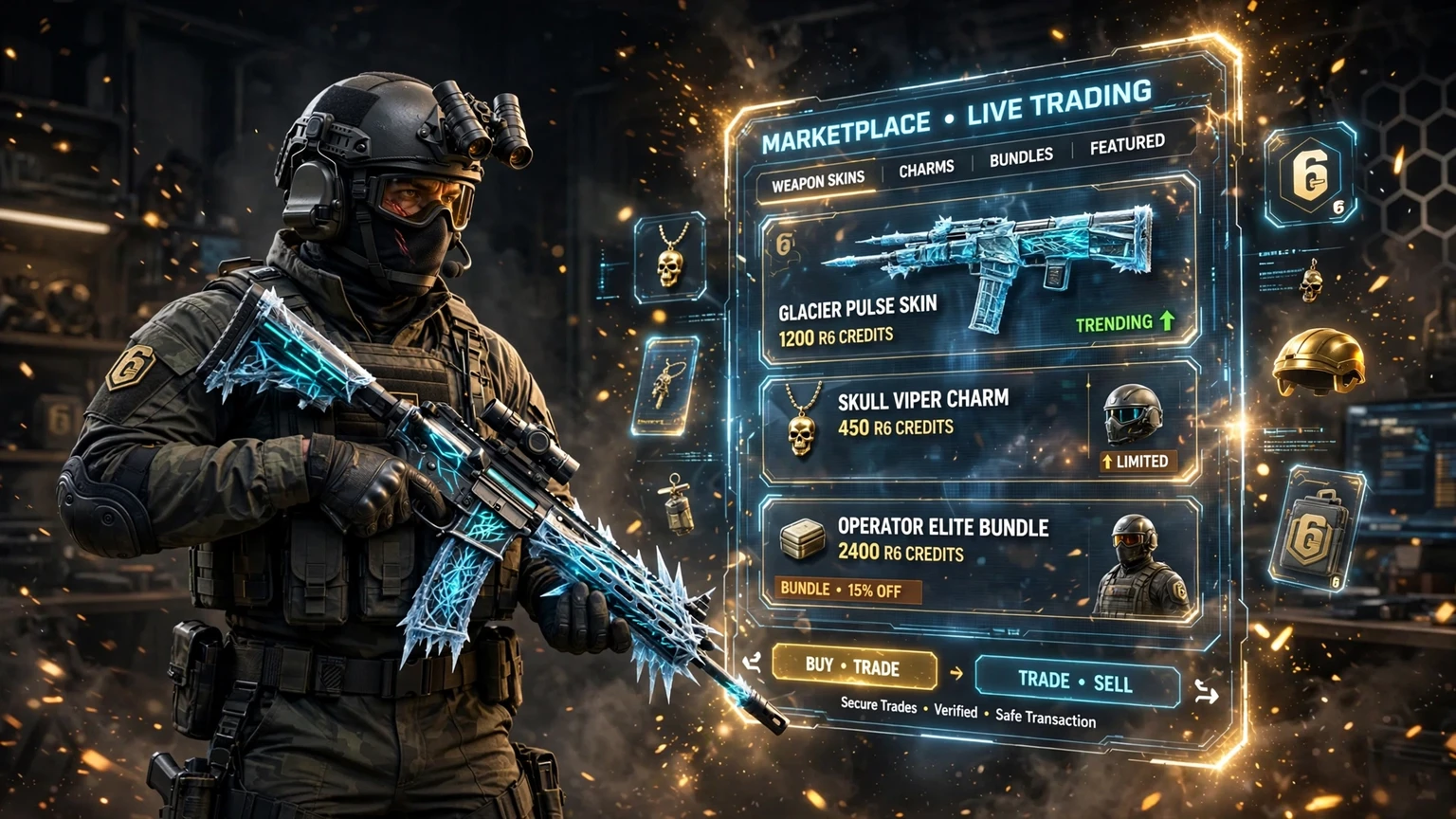
Image: R6 Marketplace Tradable Items — which Siege items can be traded and which stay locked.
What "Tradable" Actually Means on the R6 Marketplace
A tradable item is one the marketplace allows you to list for sale or buy from another player through an order. That sounds simple, but it hides an important distinction: owning an item is not the same as being able to trade it. You can own cosmetics you earned, bought, or unlocked, yet never be able to put them on the marketplace at all. Tradability is a property of the item type and its history, not of your account alone.
The marketplace works through buy and sell orders: a bid, an ask, and a match. If an item is not tradable, it never enters that order book. Tradability can also change: an item locked today may become tradable next season. Check eligibility at the moment of the trade.
The Items You Can Usually Trade
The heart of the marketplace is weapon skins, headgear, uniforms, and similar cosmetics designed to circulate between players. Most standard weapon skins fall into this group, including many popular finishes that players collect and compare. Charms, which hang from weapons and often come from events or bundles, are another common tradable category, and they attract collectors who want a complete set rather than a single showpiece.
Bundles deserve a careful note. A bundle itself is usually a shop purchase, but the individual cosmetics inside it may behave differently once they are in your inventory. Some bundle items become tradable on their own, while others stay tied to the bundle or your account. Never assume that buying a bundle automatically gives you a set of listings. Check each item separately. Universal and attachment skins are also traded, and their value often comes from flexibility across loadouts.
| Item category | Usually tradable? | Check first |
|---|---|---|
| Standard weapon skins | Yes, in most cases | Season and resale waiting period |
| Charms | Often yes | Event or bundle restrictions |
| Universal skins | Often yes | Which weapons it covers |
| Attachment skins | Often yes | Whether it came from a locked set |
| Headgear and uniforms | Sometimes | Operator and bundle origin |
The Items That Are Locked — and Why
Some items are locked by design, and no waiting period will change that. The clearest example, according to fan-guide reporting, is Elite skins. Elite sets are premium operator outfits with custom animations and victory celebrations, and fan guides consistently report that Elite skins are non-tradable by design. An Elite skin is a personal purchase for your own operator, not an investment you can resell. Treat Elite purchases as permanent additions to your own collection.
Other locked items include account-history rewards, such as rank rewards, event rewards, and progression items never meant to circulate: if an item proves you personally achieved something, letting anyone buy it would remove its meaning. The same applies to some promotional and compensation items. A third group is items restricted by an unresolved transaction or account issue; these behave like locks until the issue is resolved.
The Season Lock Rule Explained
The season lock rule surprises the most traders, so it deserves its own explanation. According to fan-guide reporting, items from the current season are locked until the next season begins. A brand-new skin released in the current season cannot be traded right away, even if it looks like every other tradable skin in your inventory. The lock is not about rarity or price. It is about timing: new content gets a protected window before it enters the open market.
The usual explanation is fairness and stability: it stops new items being flipped at extreme prices in their first days and lets the market settle before trading begins. If you want a current-season item, you will normally need to get it through the shop or the season itself, not the marketplace, and you should plan any resale around the next season. Fan guides have not always agreed on every detail, so check the specific item in the interface before you rely on any date.
| Lock type | What it means | When it lifts |
|---|---|---|
| Elite lock | Elite skins are not traded, by design | Does not lift — reported as permanent |
| Season lock | Current-season items cannot be traded yet | Next season, according to fan guides |
| Resale waiting period | A bought item cannot be resold at once | After the waiting period ends |
| Account or transaction hold | Item frozen by an account issue | When the issue is resolved |
How to Check Whether Your Item Is Tradable
The fastest check is also the most reliable: open the marketplace interface and look for the item itself. If you can place a sell order for it, it is tradable. If there is no sell option, or the item does not appear in the marketplace at all, it is locked or still in its lock window. Do this item by item, because two skins that look similar can behave completely differently. One may be a standard skin from an older season, while the other may be an Elite skin or a current-season release.
A second useful check is the item's origin. Ask three questions. First, is it an Elite skin? If yes, assume it is locked. Second, is it from the current season? If yes, assume it is season-locked until the next season. Third, did it come from a reward, a promotion, or a bundle with special conditions? If yes, look for any restriction note before you plan a trade. Finally, check recent listings: active trading is strong evidence an item is tradable, while no listings at all suggests it is locked or too new.
What Happens If You Try to Trade a Locked Item
Nothing dramatic happens, which is part of the problem. You will usually just find that you cannot list it, or that the marketplace does not offer you the option. There is no penalty for trying, but there is a real cost in wasted time and wrong expectations. Players have bought items for trading, planned a flip around them, and only discovered the lock after the purchase, when the item was already sitting in their inventory with nowhere to go.
The risk is higher with bundles and event items, where the restriction is not always obvious at a glance. A discount does not make a locked item tradable. Always check tradability before you buy for trading, not after. If you already own a locked item, use it yourself or wait out its lock; never work around a lock through unofficial trades, account sharing, or third-party sellers.
Tradable Items and Price: Why Eligibility Changes Value
Eligibility is one of the quiet forces behind marketplace prices. A tradable item has a market: buyers can bid for it, sellers can list it, and a price emerges from real orders. A locked item has no market at all, so it has no marketplace price, however rare or beautiful it may be. That is why two items that look equally impressive can have completely different trading value. One is part of the economy, and the other is not.
Among tradable items, eligibility still matters: a newly unlocked item often sees a burst of listings, a long waiting period slows flipping, and a rare limited drop can command a higher price because supply is small. Treat eligibility as part of your price research, not an afterthought.
Common Mistakes Traders Make With Locked Items
The first mistake is buying Elite skins for trading. Elite sets are among the most attractive cosmetics in the game, so the temptation is understandable, but fan guides report them as non-tradable by design. If your goal is to trade, spend your credits on tradable categories instead, and buy Elite sets only when you want them for your own operators.
The second mistake is ignoring the season: enjoy a new item yourself now, or wait until next season if your plan depends on selling it. The third mistake is trusting a single source; if a guide says tradable and the interface says not, trust the interface. The fourth mistake is forgetting the resale waiting period, which can tie up your capital in an item you cannot move yet.
Frequently Asked Questions
Are all weapon skins tradable on the R6 Marketplace?
No. Most older-season standard skins are tradable, but Elite skins are reported as non-tradable, and current-season items are season-locked until next season. Check the individual item first.
Can I trade Elite skins?
According to fan-guide reporting, no. Elite skins are premium operator sets bought for your own use, and they are not traded on the marketplace. Buy an Elite set because you want to use it yourself, not because you plan to resell it.
What does the season lock rule mean in practice?
It means items from the current season cannot be traded until the next season begins, according to fan-guide reporting. You can still earn or buy them through normal seasonal routes, but you cannot list them on the marketplace during their first season.
How do I know if my specific item is tradable?
Try to place a sell order for that exact item. If the sell option exists, it is tradable; if not, it is locked or still in a lock window. Also check whether it is an Elite skin, a current-season item, or a special-condition reward.
Do locked items ever become tradable later?
Some do. Season-locked items are expected to become tradable next season, and waiting-period items become tradable once the period ends. Elite skins are reported as permanently non-tradable, and account-tied rewards generally stay locked.
Why does an item have no marketplace price?
Usually because it is not tradable, so no orders exist for it and no market price can form. A locked item can be rare and valuable to its owner without having any marketplace value at all. Do not judge a locked item's worth by comparing it with tradable items.
Related Guides
- R6 Marketplace
- What is R6 Marketplace? Complete Trading Guide
- How does R6 Marketplace Work? Complete Trading Guide
- How to Buy on R6 Marketplace: Quick Guide for Friends & Teams
- How to Sell on R6 Marketplace: Boost Your Sales Today
- How to Trade on R6 Marketplace
- R6 Marketplace Requirements: Safe Trading Rules Explained
- R6 Marketplace Item Prices Today: Live Values, Trends & Best Deals
- Best R6 Marketplace Skins: Hot Picks, Bad Buys
Final Conclusion
Tradable items are the working parts of the R6 Marketplace, and locked items are the parts that stay personal. The difference is not a flaw in the system. It is the system working as intended: standard skins, charms, and similar cosmetics circulate between players, Elite skins stay with the operator who bought them, and new-season items wait until the next season before they join the open market.
Before your next trade, make the eligibility check a habit: confirm the item is tradable, not an Elite skin or current-season lock, and clear of any resale waiting period. Then, and only then, think about price. That order — eligibility first, price second — separates careful traders from players who buy first and discover the lock afterwards.
Official source: Rainbow Six Siege.