
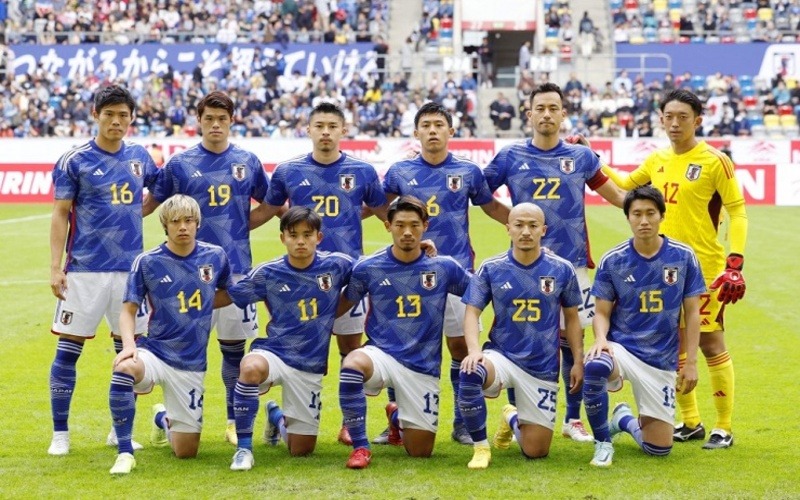
If you’re curious about the strength of the Japanese national team on the continental stage, then this is the place for you. Japan is not simply a strong team; they are a symbol of Asian football success, with a golden record that commands respect from all opponents.
So, specifically…How many times has Japan won the AFC Asian Cup?Let’s explore the entire glorious journey of the Japanese football team through the detailed article below.
How many times has the Japanese national team won the AFC Asian Cup?
And why are they always considered strong contenders whenever the tournament starts?The correct answer is that the Japanese national team has won the AFC Asian Cup four times.
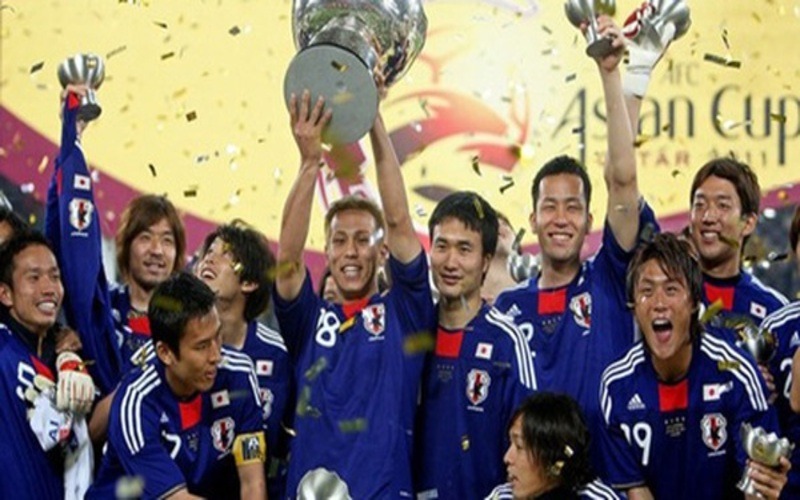
They won the title in 1992, 2000, 2004, and 2011. With this record, Japan is currently the most successful team in the history of Asia’s premier tournament.How many times has Japan won the AFC Asian Cup?
While many football nations are still waiting for their first title, Japan has already established a solid position with four championship trophies. This demonstrates stability, squad depth, and a systematic development strategy developed over many years.
The journey from a promising team to Asian champions.
Japan is very strong today, but they haven’t always been at the top. Their current success is the result of a long-term investment process.
First championship in 1992
The 1992 Asian Cup was held on home soil in Japan. This was a significant milestone, ushering in a new era for the country’s football.
Before the tournament, Japan was not considered a major force in Asian football. However, thanks to home advantage and a disciplined fighting spirit, they defeated Saudi Arabia 1-0 in the final to claim their first ever title. This historic achievement provided a powerful boost to Japanese football.
Asserting strength in 2000
After a disappointing 1996 tournament, Japan made a strong comeback at the 2000 Asian Cup.
Under the guidance of coach Philippe Troussier, the Japanese team displayed a fast-paced, modern, and effective style of play. They went on to defeat Saudi Arabia in the final to win their second championship title.
This was the period when Japan began to show that it was no longer a fleeting phenomenon but had become a real power.
Defending the title in 2004
The 2004 Asian Cup in China was a very memorable tournament. Japan faced immense pressure from the home crowd but still showed the character of a great team.
In the final, they defeated China 3-1 to successfully defend their title. The intense clashes of this match are often very captivating on live football broadcasts.Socolive TVAnd this is the first time Japan has shown its ability to maintain its number one position for many consecutive years.
His most recent victory was in 2011.
How many times has Japan won the AFC Asian Cup?And when is the nearest time?The fourth championship came in 2011 in Qatar.
Ki commented xôi lạc trực tiếp In the final match between Japan and Australia, no one expected the encounter to be so tense, extending into extra time. Tadanari Lee’s decisive goal in the 109th minute secured the victory for the Blue Samurai, lifting their fourth trophy in history.
Why has Japan achieved such lasting success?
After knowingHow many times has Japan won the AFC Asian Cup?It is necessary to understand one thing that kNo success comes from luck. This team has built its position through a clear and long-term strategy.
Scientific training for young people.
Japan invests heavily in school football, youth academies, and local training systems. As a result, they consistently produce generations of high-quality players. These players receive thorough training in techniques, tactics, and work ethic.
The professionalism of the J League
The Japanese national football league officially professionalized in 1993. The J League has helped improve the domestic competitive environment, increase professional standards, and attract many talented players.
This is a crucial foundation for the national team’s stable development. Many are probably waiting for the moment when the Japanese star shines in live football. Socolive TV.
Players who play in Europe
Many Japanese stars are currently playing in the Premier League, Bundesliga, La Liga, or Serie A. Regularly competing at the highest level allows them to accumulate valuable experience.
Upon returning to the national team, these players bring with them a modern mindset, high-speed play, and a strong competitive spirit.
What future awaits the Blue Samurai?
Four Asian Cup titles are not only a source of pride but also clearly reflect the systematic development of Japanese football over the years.
From a professional youth training system and long-term development strategy to the ability to export players to Europe, the Samurai Blue have built a solid foundation that not every team in Asia can possess. This is the reason why they consistently maintain a leading position in the region.Japan boasts the most impressive number of championship titles.
Currently, Japan still possesses a generation of talented and experienced players. Many stars are playing in top leagues such as the Premier League, Bundesliga, or Serie A, thereby accumulating top-level competitive experience. The combination of youthful energy, good technique, and modern tactical thinking makes them a strong contender in every Asian Cup.
If they continue to maintain their current scientific approach to football, the number of 4 titles could easily be increased to 5 or even 6 in the future. With the potential they have,highlight bóng đá việt nam SocoliveWe believe that the Blue Samurai are likely to remain the most formidable force in Asian football for many years to come.
Conclusion
So How many times has Japan won the AFC Asian Cup?The answer is 4 times, the most in the tournament’s history.
Not only is Japan rich in achievements, but it is also a model of development worth emulating for Asian football. With a solid foundation and abundant resources, the Samurai Blue will be a major challenge for any team aiming for continental glory in the future.