
A new idea does not always begin with an empty screen. Many creators start with a familiar rule, visual style, control system, or community trend, then reshape it into something different. Viral games often grow through this process because players quickly understand the familiar part while becoming curious about the unexpected change. Remix culture turns playing into an ongoing conversation where ideas are borrowed, tested, transformed, and passed forward.
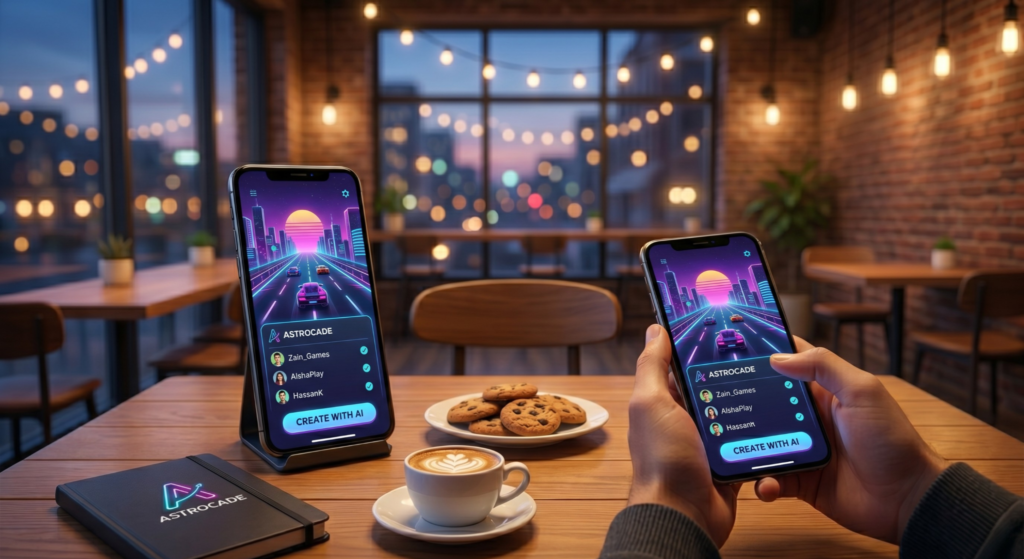
How Remix Culture Changes Online Games
Online Games are no longer always treated as finished products that players simply consume. On a modern social gaming platform, one project can inspire new maps, alternative rules, challenge modes, characters, and completely different uses of the same basic system.
Remixing does not have to mean copying an entire project. A creator might take the movement of a racing title and place it inside a puzzle. Another might turn a competitive arena into a cooperative survival challenge. A simple scoring system could become the foundation of a social guessing activity.
Platforms increasingly provide tools that support this process. Roblox offers editable templates and a Creator Store containing models, scripts, interface elements, sounds, and other development assets. Fortnite allows creators to build and publish experiences using Creative and Unreal Editor for Fortnite. Minecraft add-ons can change visual elements, rules, and the behavior of creatures inside a world.
The result is a type of creative culture where the boundary between player and developer becomes less fixed. Someone may discover a project on Monday, build a variation later that week, and inspire another person by the weekend.
A Remix Starts With a Changed Rule, Not a Changed Picture
Changing the appearance of a character is customization. Replacing the background is decoration. A meaningful remix changes how the player thinks, acts, or makes decisions.
Online Free Games can be strong testing grounds for these changes because players can enter quickly and decide whether the new idea works:
- Turn an individual race into a team relay where players share one score.
- Replace unlimited movement with a limited energy supply.
- Make enemies useful when they are guided toward the correct location.
- Change a survival challenge into an escort mission.
- Give every player a different piece of the same information.
- Turn a fighting arena into a space where avoiding conflict produces the best result.
- Add a time loop that changes the level after every failure.
- Use familiar controls but create a completely different goal.
The strongest remixes create a clear sentence beginning with, “This works differently because…”
A weak variation may look new in a screenshot while feeling almost identical during play. A strong variation may use simple visuals yet create decisions that were not present in the source idea.
Familiar Pieces Can Help Players Learn Faster
Originality does not require every part to be unfamiliar. Players often enjoy a mixture of recognition and surprise.
A familiar control lowers the learning barrier. If players already understand that arrow keys control movement, the creator can introduce an unusual objective without also teaching a complicated input system. If the audience recognizes a platforming structure, the remix can focus attention on gravity changes, cooperative timing, or disappearing paths.
This is similar to how people remix recipes, music, jokes, and stories. The shared foundation gives the audience a way into the experience. The creator’s changes give them a reason to stay.
Templates support this type of learning. Roblox describes its templates as editable starting experiences containing default objects that creators can use to begin a project. Rather than rebuilding every basic element, a new developer can study the structure and spend more time changing the part that matters.
Shared foundations can be especially useful for beginners. They allow someone to learn by opening a working system, changing one element, testing the result, and discovering why it behaves differently.
Heavy Combat Inside a Contained Arena
Tankor Arena is a combat arena game where the player controls a tank and battles waves of enemies or competes against other players. Movement and positioning matter because remaining in one place can make the vehicle an easy target. The player must watch several directions, use the battle zone carefully, and attack before opponents gain control of the space. Enemy waves create growing pressure, while player battles add unpredictability because real opponents may change tactics without warning. Success depends on balancing direct attacks with survival and awareness.
What an Online game No Download Changes
An Online game No Download makes remix culture faster because a new variation can be shared through a page rather than a large installation process. A creator can publish a small experiment, send it to a community, and begin receiving reactions while the idea is still developing.
Quick browser access supports remix communities in several ways:
- A creator can share an early version with less setup.
- Players can compare two variations without installing separate programs.
- Friends can test a new rule during an existing voice call.
- A community can run a challenge based on the same starting idea.
- Players can play with friends online and discuss which version works better.
- A creator can update a project after receiving useful feedback.
- Teachers or community leaders can use one starting project for several creative tasks.
- New players can test a strange idea without making a purchase first.
Fast access also allows failure to become less frightening. A small experiment does not need to become a major release. It can teach the creator what works, provide one enjoyable session, or inspire a better project later.
Game jams encourage this rapid process by giving participants a theme, rule, or limited period in which to create something. Itch.io allows people to host and join online jams, providing communities with a clear place to share work made around common creative limits.
How to Tell a Creative Remix From a Lazy Copy
Not every project using a familiar idea adds value. Some change a title, thumbnail, or character model while keeping nearly every meaningful part the same.
Players can judge a remix by asking practical questions:
Does it create a new decision? Does it change the pace? Does it support a different number of players? Does it produce new strategies? Does it combine ideas that normally remain separate? Does it offer a clear reason to choose it over the earlier version?
A creative remix usually has a point of view. It may make a stressful system relaxing, turn a serious theme into comedy, or take a solo challenge and redesign it around teamwork. The changes should work together instead of feeling like random additions.
Creators should also explain their contribution. A short description such as “a cooperative variation where players control different parts of one vehicle” tells the audience what has changed. Vague claims such as “the best version ever” do not provide the same value.
Players should not judge only by the number of new features. Removing a rule can transform an experience as much as adding one. A racing challenge without steering, a puzzle without a timer, or a survival mode where enemies cannot be attacked may force the player to approach the entire system differently.
Shared Tools Can Speed Up Creative Learning
Remix culture can teach design in a practical way. A creator does not only read about balance, movement, difficulty, and feedback. They change one of those elements and watch what happens.
The Roblox Creator Store contains assets made by the platform and independent creators, including models, materials, scripts, plug-ins, interface elements, and sound effects. Its cloud-based asset system also allows approved items to be reused across projects.
A beginner might begin with a working movement script, then adjust speed or jumping. Another creator could use an existing interface element while focusing on level design. Shared tools allow people with different strengths to participate, but they still need to understand the permissions and terms attached to each asset.
AI games add another layer to this process. A creator might use generated suggestions to explore rule combinations, produce temporary dialogue, test mission ideas, or create different challenge layouts. However, generated material still needs human direction. The creator must decide whether the result supports the central idea, follows platform rules, and respects the rights of other people.
Fast creation should not replace careful judgement. A project containing many generated or shared pieces can still feel empty when those pieces do not serve one clear experience.
Remix Communities Need Credit and Permission
Healthy remix culture depends on respect. Taking inspiration from an idea is different from copying protected artwork, music, code, characters, or complete level designs without permission.
Before using someone else’s work, creators should check the license, platform terms, and any instructions provided by the original author. They should use assets they created themselves or are clearly permitted to use. Roblox’s official audio guidance, for example, tells creators to import audio only when they are certain they have permission, while also providing free-to-use material through its Creator Store.
Credit is also valuable when it is not legally required. It shows players where an idea began and helps the original creator receive attention. Clear credit can turn a remix into a visible creative conversation instead of making it appear that the later creator invented everything alone.
Useful credit may include:
“Based on a mechanic created by…”
“Built from the official template…”
“Uses assets from…”
“Inspired by the community challenge…”
Creators should avoid using protected brands, characters, logos, or music simply because those elements are popular. A project may be free and still violate someone else’s rights. Platform availability also does not prove that every uploaded asset is safe to reuse.
Remix culture grows when creators can trust that sharing an idea will lead to recognition rather than silent copying.
Players Help Decide Which Remixes Survive
Players are not passive in this system. Their choices determine which variations receive attention, updates, and further creative work.
Helpful feedback should focus on the changed idea. Instead of writing “bad game,” explain that the new rule makes rounds too slow or gives one player an unfair advantage. Instead of saying “make it better,” describe the moment when the experience became confusing.
Communities can also compare versions fairly. Play each one for the same amount of time. Judge controls, clarity, originality, balance, and replay value separately. A popular theme should not automatically win over a stronger design.
Players should support creators who credit sources, explain their changes, respond thoughtfully to reports, and improve the experience over time. These habits encourage better remixing across the whole community.
The next major idea may not appear as one completely original invention. It may emerge from several creators changing the same small rule in different directions until one version reveals a new kind of play.
Remix culture is giving online play a more open and active future. Players can discover an idea, creators can transform it, communities can test it, and the strongest changes can inspire another generation of games. The process works best when every remix adds a meaningful choice, respects its sources, and offers more than a new coat of paint.
Casual games are especially suited to this creative movement because their central rules are often easy to understand and quick to change. A simple mechanic can become competitive, cooperative, strategic, relaxing, or chaotic depending on how the next creator chooses to rebuild it.