
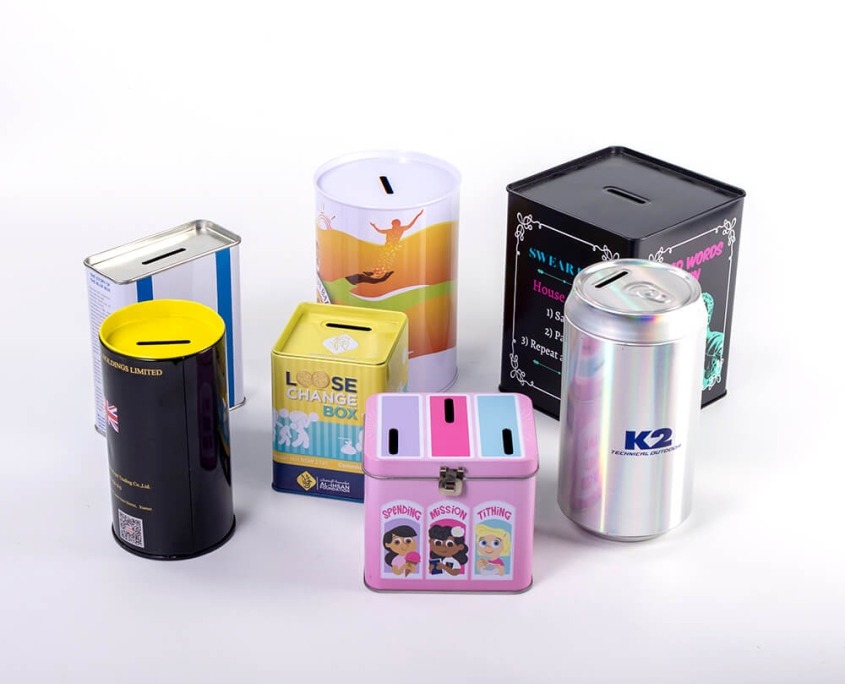
Product spoilage rarely begins with a sudden, major malfunction. More often, it starts with subtle details: a lid that isn’t tight enough, hidden gaps at the seams, or packaging that appears sturdy but allows air, moisture, or odors to seep in over time. For custom tin cans, these defects can silently damage product quality before the consumer even opens the package. For brands packaging food, tea, coffee, candy, cosmetics, or specialty products, poor sealing is more than just a technical issue; it directly threatens shelf life, brand reputation, and consumer trust.
Custom Tin Cans and the Causes of Product Spoilage Due to Poor Sealing
To properly address the problem, it’s essential to understand how it occurs. In custom tins, spoilage typically begins when the packaging fails to effectively protect against the external environment. Air enters the can, moisture alters the internal environment, odors spread, and sensitive products begin to lose freshness.
The sealing performance of custom tin cans is crucial because many products are highly sensitive to environmental factors. Tea leaves easily absorb moisture and odors; coffee loses its aroma upon exposure to air; candy may become sticky or spoil; powdered products may absorb moisture and change texture; even cosmetics are affected if they are too easily exposed to air or moisture. In all these cases, poor sealing shortens the product’s shelf life.
Poor sealing typically manifests in one of three ways: First, the cap and bottle may not be tight enough. Second, sealing performance may vary across product batches. Third, the bottle may appear sealed, but minor leaks may still occur during storage or transportation. These problems may be difficult to detect initially, so brands sometimes only discover the issue after receiving spoilage complaints.
A proper structure is needed before sealing.
A strong seal begins with a robust structure. Many spoilage problems are caused by packaging design that doesn’t meet the product’s actual protection needs. Even if the packaging looks high-end, it can still fail if a tight seal isn’t achieved. Therefore, the primary improvement should be structural rather than aesthetic.
Different products require different sealing methods. Some custom tins are best suited for friction-type lids, while others require hinged lids to provide stronger contact pressure. Certain products are suited to slide-on lids with internal sealing elements, while others require more advanced lid designs to improve their airtightness and moisture resistance. Tin box manufacturers must select the appropriate lid structure based on the product’s sensitivity, shelf life, and shipping environment.
Can wall thickness and lid geometry are also crucial. If the lid edge is too loose or the can opening shape is not precise enough, the seal will be weakened. If the can is prone to bending and deformation during transport, the sealing pressure may change over time. Even the shape of the can opening edge can affect the seal performance. Slight unevenness at the edge can create gaps that are difficult to detect with the naked eye but are enough to allow moisture to seep in.
Relying on precision manufacturing processes to prevent leaks
Even the best structure cannot perform optimally if manufacturing precision is poor. In sealing applications, even minor defects can have serious consequences. For example, slight deformation of the lid edge, slight diameter deviation, or uneven seams can all allow air and moisture to seep in. Therefore, precise control is a key factor in maintaining product freshness.
Reliable tin box manufacturers must strictly control the dimensional accuracy of every step. The can dimensions must be within permissible tolerances. The lid must fit the opening perfectly and apply consistent pressure. The sealing edges must be smooth and even. The contact surfaces must remain smooth and stable. If these elements deviate too much, some tin cans will seal well, while others will fail. This inconsistency makes product spoilage more difficult to predict and prevent.
Custom tin cans require suitable liners, gaskets, or internal seal supports.
Many products cannot achieve a reliable seal with just metal contact. In such cases, internal seal supports become a crucial part of the solution. Depending on the product type, this may include liners, gaskets, or other internal seal aids to enhance the barrier between the product and the external environment.
This is especially important for products that are highly sensitive to moisture or aroma loss. Tea, powdered health supplements, coffee, specialty foods, and premium gifts often require stronger internal protection than standard can seals. The choice of liner material should be matched to the product’s intended use. Some products require odor resistance, others stronger moisture protection, and still others need smooth contact surfaces that can withstand repeated opening and closing without affecting their performance.
For custom tin cans, the liner solution must match the lid structure. A liner that performs well with one lid style may not perform well with another. Lid design, product shape, and storage conditions all affect the final result. At TSING, we view liners and inner seal supports as practical tools, not optional upgrades. For perishable products, these details determine whether the product can maintain a stable shelf life and avoid repeated customer complaints.
The quality of custom tin cans can be improved by refining production and storage methods.
Even well-designed tin cans can fail if production and storage processes are not properly managed. Therefore, solving deterioration problems caused by poor sealing is not only a design issue but also an operational one. The entire packaging process must ensure effective sealing from start to finish. During filling, the product must be introduced into the can in a controlled manner. Overfilling can affect the lid pressure. Uneven filling can cause shaking inside the can, affecting the lid’s seal. Contaminants around the can opening weaken the contact surface. If the product or packaging surface is dirty, the seal may be unstable. Therefore, the packaging line should keep the can opening clean and ensure the sealing area is unobstructed.
After sealing, storage conditions are equally important. Custom tins should be stored in environments that avoid excessive heat, humidity, and physical damage. High humidity will affect the seal over time, even a good seal. At TSING, we advise clients to consider sealing as part of the product lifecycle. Custom tin cans are not independent of the supply chain; they must play their proper role at every stage, from filling, sealing, and storage to transportation, retail display, and end use.
A good seal is essential to protect product value.
When poor packaging seals lead to product spoilage, its most important function fails. Packaging may look beautiful, but if it cannot preserve freshness, retain aroma, block moisture, and maintain product stability, it cannot effectively uphold the brand image. Therefore, sealing should always be a core priority in the design and production of custom tin cans. The solution is obvious. First, choose a suitable packaging structure. Second, control production precision. Add linings or inner seals as needed. Conduct packaging testing before mass production. Protect the cans during filling, storage, and transportation. For TSING, custom tin cans are more than just metal containers; they are a protective system designed to ensure safe delivery and stability throughout the product’s shelf life.